
Midlife Brain Fog: Why You Can’t Remember Anything (and What Actually Helps
You walked into the kitchen and forgot why. Again. And somewhere underneath the mild annoyance, there’s a quieter, scarier thought: is this normal? Is something wrong with me? What the hell is midlife brain fog?
Here’s what nobody sat you down and explained: brain fog in midlife is real, it’s common, and it’s almost never what you’re most afraid of.
I know, because I live it. At 57, a routine exam turned into a stage 3 breast cancer diagnosis, and medical menopause came right along with my chemo and radiation treatment. Nobody handed me a manual for what that would do to my brain. I still deal with brain fog and decision fatigue, so none of this is theory for me.
So let’s do what the rushed doctor’s appointment never does: walk through what’s actually happening, what helps, and how to figure out what’s driving YOUR fog.
What Midlife Brain Fog Actually Is

“Brain fog” isn’t a medical diagnosis. It’s the everyday name for a cluster of things: losing the word mid-sentence, forgetting why you walked into a room, rereading the same paragraph four times and still not knowing what it said. When researchers measure it, the dips show up in verbal memory (learning and recalling things you hear), pulling words out of memory quickly, and attention.
And you are not imagining it. Somewhere between 40% and 60% of women report brain fog or forgetfulness during the menopause transition. If it feels like your whole friend group is losing their keys at the same time, that’s because they probably are.
Is It Early Dementia? (The 2am Question)
Let’s deal with the scary one first. For most women, midlife brain fog is a transition, not a cliff.
The long-running SWAN study (Study of Women’s Health Across the Nation) followed more than 2,000 women through the menopause transition. Women who reported memory and processing problems got their pre-menopause thinking skills back after menopause. A 2021 brain-imaging study of 161 women at Weill Cornell found real changes in brain structure and energy use across the transition, but also signs that the brain adapts: some of the declines were temporary, and brain measures largely stabilized after menopause.
That’s not a promise nothing serious could ever be going on (that’s what the “when it’s not just menopause” section below is for). But losing a word in your 40s or 50s is a very different thing from dementia, and the research is on your side.
Why It Happens: Your Brain Has a Fuel Problem
Your brain is about 2% of your body weight, but it burns roughly 20% of your body’s energy. It’s the most fuel-hungry organ you’ve got, and it runs mostly on glucose.
Estrogen is part of how your brain manages that fuel. In the Weill Cornell study, glucose use dropped from pre- to post-menopause across large parts of the temporal lobes (home base for memory). At the same time, the brain partly compensated, with more blood flow and energy production in some of the same areas. Translation: when estrogen fluctuates and drops, your brain’s power grid has to rewire itself. The fog is what that rewiring can feel like from the inside.
It’s not a character flaw. It’s fucking chemistry.
Rarely is It Just Hormones
Here’s why most advice doesn’t stick: brain fog is almost never one thing. Hormones set the stage, and then everything else piles on.
Hot flashes and night sweats. In one small study, women underreported their hot flashes by more than 40%, and the more hot flashes a monitor actually picked up, the worse their verbal memory scored. Menopause researcher Dr. Pauline Maki names hot flashes, night sweats, sleep disruption, and mood changes as menopause symptoms that seem to affect brain health and thinking.

Sleep. Your brain takes out the trash while you sleep. In mice, researchers found the brain’s waste-clearing system works much harder during sleep, clearing waste up to twice as fast as when awake. That’s animal research, so don’t take it as gospel for humans yet. But it lines up with what you already know: wreck the sleep, and the next day’s brain is mush. Night sweats and 3am wake-ups steal exactly the sleep your brain needs.
Stress and mental load. Caregiving, work, aging parents, teenagers, the endless running list in your head. Chronic stress is one of the most common drivers of brain fog, and midlife hands most of us a heaping plate of it.
Blood sugar. This one’s genuinely debated, so I’ll be straight with you. Some research suggests estrogen helps your body handle insulin and glucose, and that losing it can tilt you toward insulin resistance. Other studies haven’t found that menopause itself changes insulin sensitivity. What’s not controversial: blood sugar swings are a commonly cited cause of foggy, crashy afternoons, so it’s worth watching your own pattern.
Put it together and you get a loop: bad sleep spikes stress, stress messes with eating, and shifting hormones make all of it harder. That’s why only fixing one piece keeps failing. It’s a connected system.
What Actually Helps (Starting Today)
No miracle cures here. Just small, real inputs that stack.

- Drink a glass of water. In studies, being dehydrated by about 2% of your body weight impairs attention and short-term memory. The evidence at milder levels is mixed, but water is cheap and it’s right there.
- Go for a walk. In a randomized trial, adults aged 20 to 67 (about 70% of them women) who did aerobic exercise four times a week for six months improved their executive function (focus, planning, getting shit organized), and the older they were, the bigger the benefit.
- Try cyclic sighing for 5 minutes. Two inhales through your nose, one long, slow exhale through your mouth, repeated. In a Stanford study, 5 minutes a day improved mood and slowed breathing rate more than mindfulness meditation did. It’s a stress tool, not a memory pill, but stress is one of the fog drivers.
- Protect your sleep like it owes you money. Cooler room. Breathable layers if night sweats wake you up. If afternoon coffee keeps you awake, move it earlier.
- Track your fog for one week. When does it hit? Compare it against your sleep, hot flashes, meals, and stress. You’ll start to see your pattern, and you’ll have real data to bring to a doctor so you don’t get brushed off with “it’s just your age.”
- Take the symptoms that wreck your brain seriously. If hot flashes or night sweats are shredding your sleep, bring that to a menopause-literate provider. One honest note so nobody oversells this to you: The Menopause Society does not recommend hormone therapy to prevent or treat cognitive decline, and in early natural menopause its effect on thinking is neutral. Treating hot flashes with hormones may help memory indirectly, but that still needs proper trials. Go in for the symptoms, not for a “brain pill.”
When It’s Not Just Menopause
Menopause isn’t the only thing that fogs a brain, and some of the other causes are very fixable. Common ones include thyroid problems, low vitamin B12, anemia, sleep apnea (snoring is a red flag), medication side effects, and depression. If your fog lasts for weeks, keeps getting worse, or comes with confusion, numbness, or balance problems, see a doctor and ask about basic blood work like a blood count, thyroid, B12, iron, and glucose.
And if it’s sudden (sudden confusion, slurred speech, weakness, vision loss, or a severe headache), that’s not brain fog. Get emergency care now.
If a doctor shrugs off your fog, that’s your cue to find one who takes midlife women seriously. Advocating for yourself isn’t being difficult. It’s survival in a system that wasn’t built for us. (More on that in The Circle of Death.)
Find Out What’s Driving YOUR Brain Fog
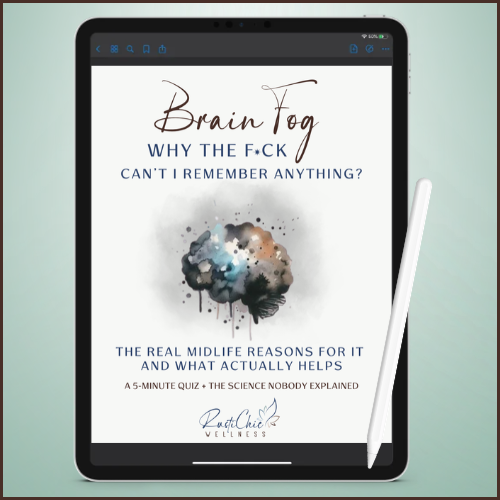
You’ve read the science. Now let’s make it personal. This free 5-minute quiz shows you which driver may be fogging YOUR brain: sleep, blood sugar, hormones, stress, or the Perfect Storm of all of them at once (spoiler: that’s where most of us land). You get your result, the science nobody explained, and quick wins matched to your fog type.
Stop Googling “early onset dementia” at 2am. Take the quiz instead.
Take control now for a life worth living later. Because the systems that are supposed to help you, don’t.
I’m not a doctor, and this post isn’t medical advice. It’s research plus lived experience, written so you walk into your next appointment informed.